

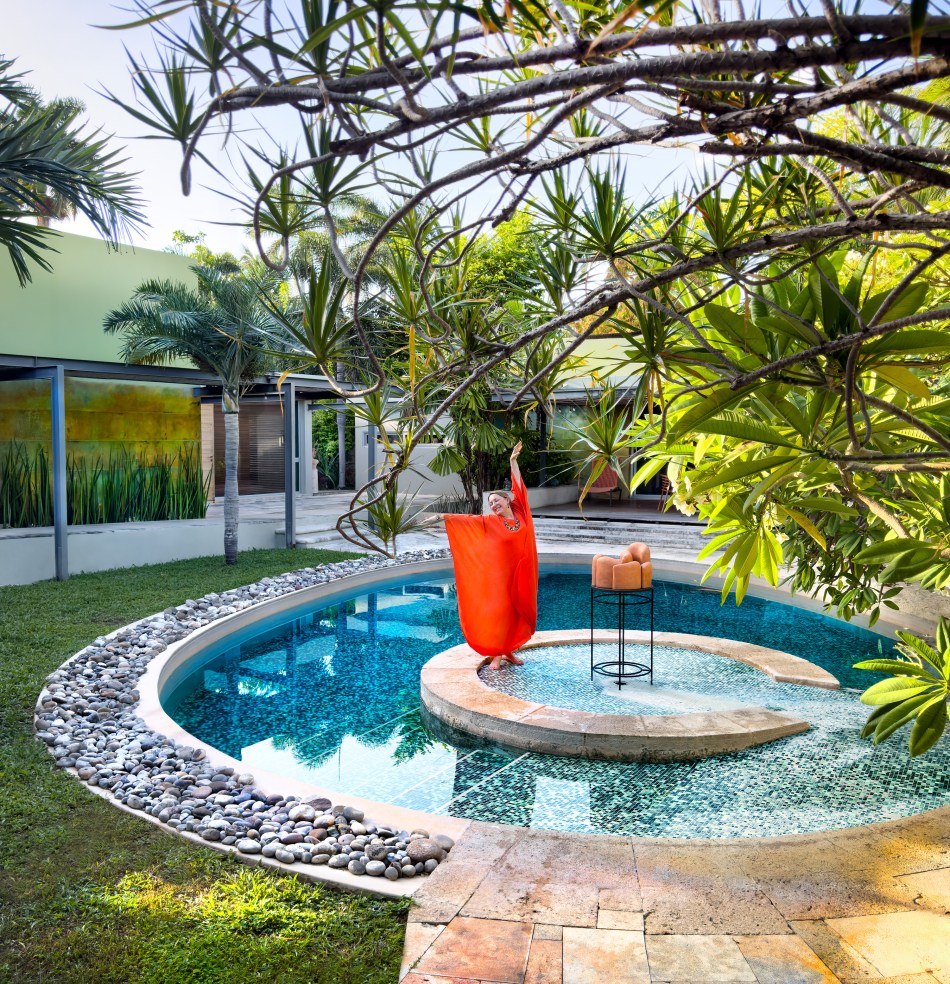
“There are things that are not sayable. That’s why we have art.”
Leonora Carrington
The henequen sculpture in the corner of Marcela’s studio cradles a spirit more intimate than the towering pieces that fill her workroom. Thousands of black threads are woven together like strands of DNA, with four large knots marking time along the rope. The sculpture seems both fragile and resilient, much like the artist herself. “That piece has no name”, Marcela explains, “because the pain it holds is universal.”
In the Yucatan, henequen embodies a history of wealth and poverty, strength and fragility, beauty and pain. Using her hands, Marcela transforms hilo made from tough henequen fibres into symbols of collective memory; crosses spiked with cactus, ropes and knots coiled like living things—and the dresses. “The dresses are like ‘artificios’, masks we wear as women, with the roles we play or are forced to play,” Marcela said. “They represent the strength and individuality inherent in ourselves, but often not seen or embraced.”
Marcela Diaz is well known in the Yucatan, for her unconventional life, and her work as a textile artist. She champions both, making no apologies for her decisions, or how she chooses to express herself. “I was considered la oveja negra,” Marcela laughs. “Maybe because of that, I thought I had to be the perfect wife, mother, daughter, sister, friend – but that kind of life can break you.”
With Marcela, it almost did. Becoming a young widow at 40 left her with four small boys and an existential crisis. Her art literally saved her, but not until she set fire to it all. “I did not think I could survive Ricardo’s death, and so my work could not survive either,” Marcela said. But like a phoenix rising from the ashes, Marcela embraced la esperanza de vidas, returning to her art with the idea that every life carries hope.
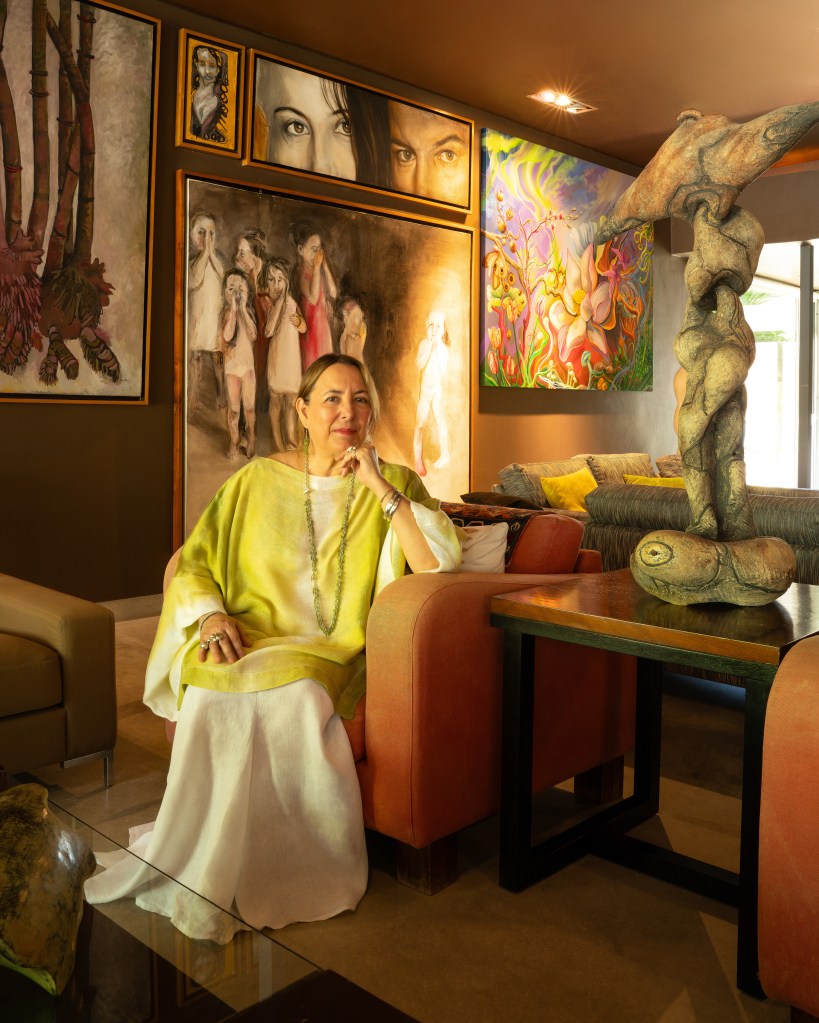
Marcela’s studio is also her home, where she lives with an art collection as wildly expressive as she is. From the Gerda Gruber Foundation, where she studied, to painters, photographers, and sculptors, Marcela has spent her life supporting fellow creatives. She hopes one day to open her collection so that others can be as inspired as she is, by the artists who built a life here.
Two decades of working, while often fighting against her own physical limitations, have left Marcela more contemplative. There are times when her injured body and traumatized heart have resisted healing. But like the ceramic sculpture in her sala, Marcela sees beauty in what was once shattered, but is now whole. “One of my grandchildren broke that piece,” she said. “At first I was upset and turned it away from my eyes so that I could not see the crack. Now, it seems more precious, because it has survived. Deja que tus cicatrices se conviertan en estrellas,” she said. “Let your scars become stars.”
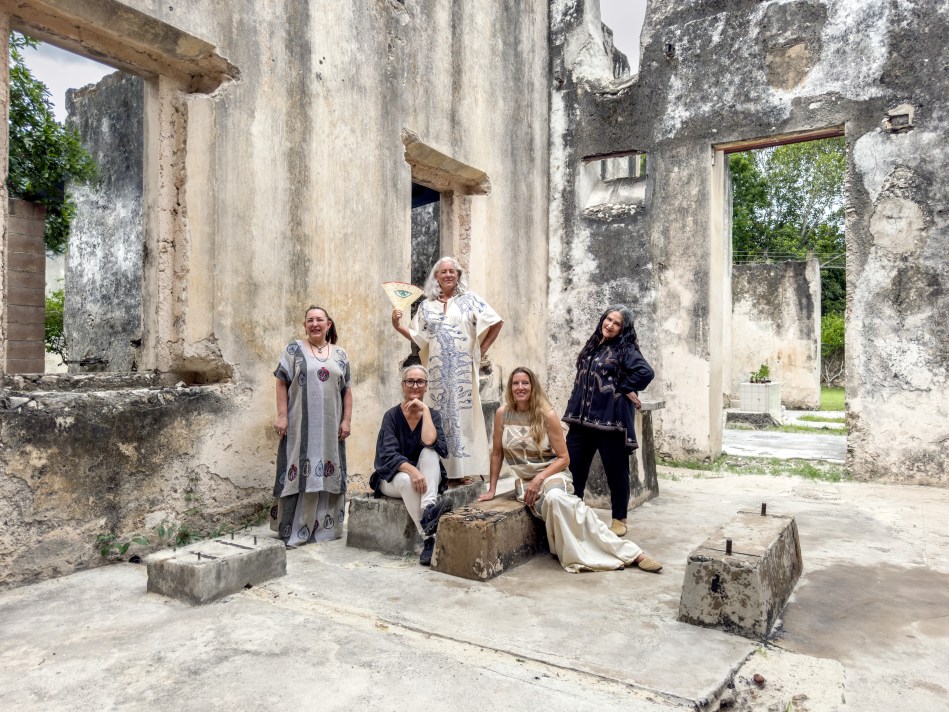
Tactile Resistance was published in the Hacienda Issue of Yucatan Magazine in November 2025. Many thanks to Creative Director & Photographer Patricia Robert and Lee Steele, Editorial Director, for the challenge to capture these five amazing women – in under 500 words! Much gratitude to (l to r) Marcela Diaz, Josefina Larrain, Marjorie Skouras, Angela Damman, and Elena Martínez Bolio – for giving me your time and trust. I encourage readers to find out more about these talented humans via their websites.
 yomimiyo
0 comments on “Tactile Resistance: Marcela Diaz”